
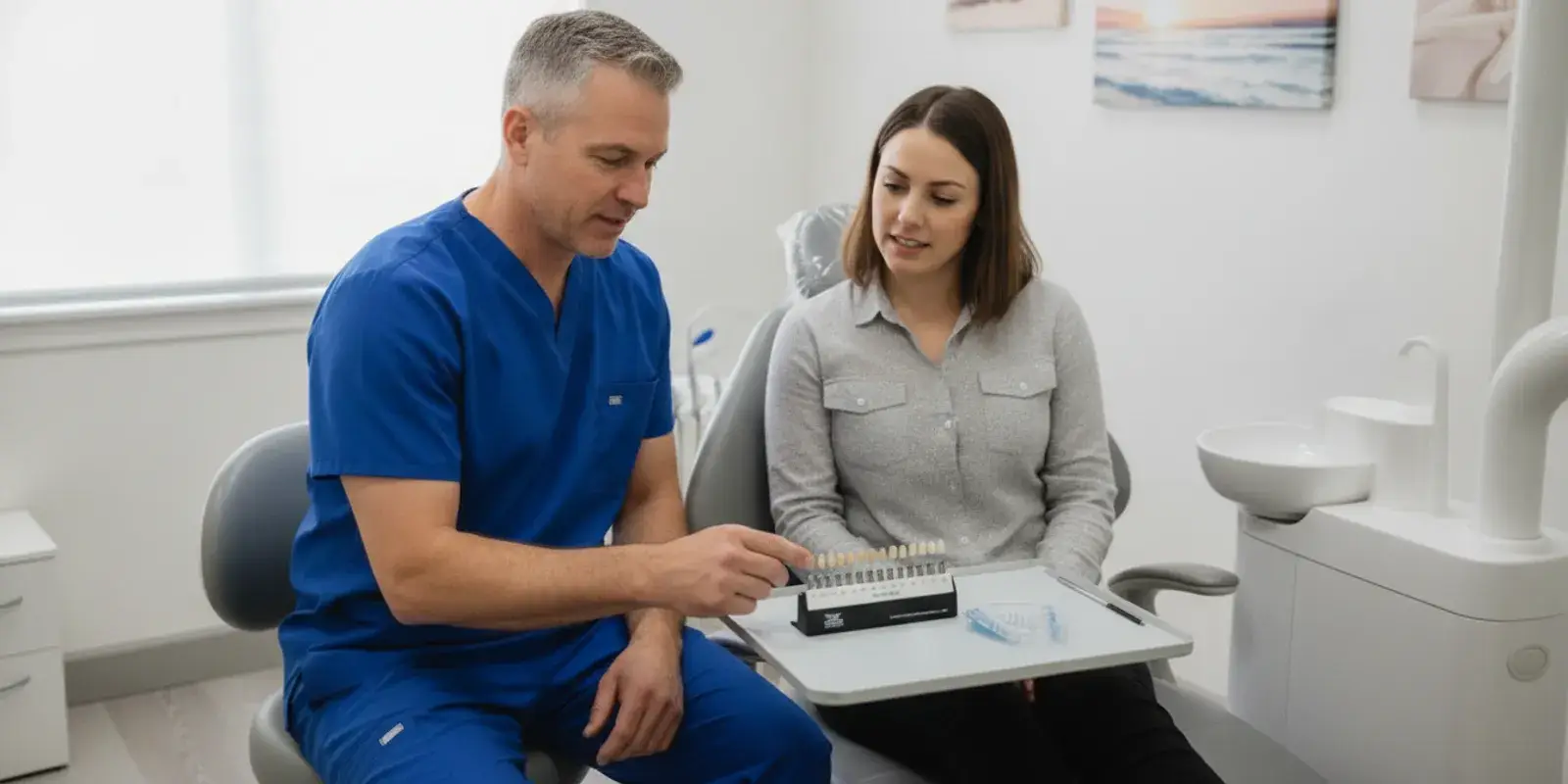
If you are weighing professional teeth whitening vs at-home kits, the best choice depends on your teeth, the kind of discoloration you have, and what you want from treatment. Both approaches can lighten some stains, but they differ in how they are selected, supervised, and fitted into your dental care. Here is a practical comparison to help you understand the tradeoffs and prepare useful questions before you choose.
Contact Cameron Park Dental Care to discuss whitening
What Is the Difference Between Professional Whitening and At-Home Kits?
Professional whitening is discussed with a dental professional, who can examine your teeth and gums, review your dental history, and help determine whether whitening is an appropriate option to consider. The specific approach depends on the practice and the patient’s circumstances. Cameron Park Dental Care offers teeth whitening; an appointment is a chance to discuss your goals, ask what options may be appropriate, and understand the next steps. Explore the practice’s teeth whitening service for information about care in Cameron Park.
At-home kits are products designed for consumers to use outside a dental office. The category includes different formats, such as strips, trays, pens, and other products. Instructions, ingredients, application methods, and recommended use vary by product, so one kit may not be equivalent to another. Some are intended for repeated use over a specified period, while others have a different use pattern. Read and follow the particular product’s instructions instead of assuming all kits work the same way.
The phrase “professional versus at-home” can sound like a simple contest between stronger and weaker whitening. In practice, the decision is more individual. The condition of your teeth, the source and location of staining, existing dental work, your tolerance for possible sensitivity, and your preference for guidance can all matter. A kit’s packaging cannot evaluate your oral health; a professional conversation can help put your options into context.
Neither route should be treated as a promise of a particular shade or a substitute for routine dental care. Whitening aims to change the appearance of natural tooth color. It does not repair decay, replace a filling, or address every cause of discoloration. If a tooth has changed color suddenly, feels uncomfortable, or looks different from the others, ask a dental professional about the change before trying to whiten it.
How Do Professional and At-Home Options Compare?
This overview focuses on the factors patients commonly weigh. It is not a guarantee about how any product or treatment will work for an individual. Product formulas differ, and a dentist can explain the professional options available at the practice after learning more about your needs.
- Assessment: A professional discussion can include an examination and review of dental work and oral health. A retail kit is selected by the consumer and does not include an individual dental assessment.
- Guidance: Professional care provides an opportunity to ask questions and discuss what to expect. With an at-home kit, the product instructions are the main guide unless you contact a dental professional separately.
- Fit and application: Product formats vary. A consumer product may use a standard format, while a dentist can explain whether a particular approach is suitable for you. Do not assume a kit will fit or work the same for everyone.
- Convenience: A kit may be used at home according to its directions. Professional care involves arranging an appointment and following the plan discussed with the dental team.
- Costs: Prices vary by product and by the professional approach recommended. Ask for current costs and what is included rather than relying on a general estimate or comparing unlike products.
- Personal context: Existing crowns, fillings, gum concerns, tooth sensitivity, and the reason for discoloration can affect the conversation. A package label cannot account for all of these factors.
Think of the decision as a choice about both the whitening method and the amount of support you want. Some people value the simplicity of using a product on their own. Others prefer to start with an exam and a discussion about whether whitening suits their teeth. If you are unsure which category you fit into, asking questions before buying or beginning treatment is a reasonable first step.
What At-Home Product Formats Might You Encounter?
At-home whitening products may be presented as strips, trays, pens, or other applicators. The name of the format does not tell you everything about how it should be used. Read the label for the intended application, contact time, frequency, age guidance, warnings, and storage directions. Follow the instructions for that specific product rather than borrowing a schedule from a different brand or format.
A strip is designed to be placed in a particular way, and the package directions explain where and for how long. A tray product may require attention to how the tray is filled and positioned. A pen or brush-on applicator may have its own directions about how much to apply and when to let it dry or rinse. These broad descriptions are not recommendations for any particular product; individual directions govern use. If the device or product does not seem to fit your teeth, do not force it or improvise a new method.
Some products focus on surface cleaning rather than the same kind of color change people expect from a whitening treatment. Product labels can use similar language for different purposes. Check what the product claims to do and what ingredients and warnings it lists. If the label leaves you uncertain whether it is intended to whiten, clean, or maintain appearance, ask the manufacturer or a dental professional before using it.
Do not choose based only on a photo, a testimonial, or a promise of a dramatic shade change. Images can be affected by lighting, editing, and the camera. One person’s experience cannot predict yours. Evaluate whether the directions are clear, whether the product is appropriate for the person who will use it, and whether you know what to do if you have discomfort. If a claim sounds absolute, be cautious: individual results and suitability vary.
How Can You Set Realistic Expectations?
Before whitening, it can help to describe the change you want in everyday language. For instance, you might want your teeth to look a little brighter in photographs, or you may want to understand why one tooth looks darker. These are different concerns and may call for different conversations. A specific goal is more useful than an undefined request for the whitest possible shade because it gives the dentist something concrete to discuss.
Keep in mind that tooth color is not determined by a single factor. Teeth differ naturally, and restorations may not respond like natural enamel. A change that looks noticeable to one person may seem subtle to another. Lighting in a bathroom, a car, or a photograph also changes how teeth appear. It is better to discuss the appearance you hope to achieve and possible limitations than to rely on a fixed shade target or an image from an advertisement.
Whitening is not a one-time solution to every cosmetic concern. If a tooth is chipped, has an uneven edge, or has a restoration with a mismatched shade, whitening alone may not address the feature that bothers you. A dentist can help separate concerns that may be about color from those that relate to tooth shape, alignment, or existing dental work. This does not mean that additional treatment is needed; it simply helps clarify what whitening can and cannot be expected to change.
It is also fine to decide that the possible change is not worth the effort, expense, or risk of sensitivity for you. There is no obligation to pursue a cosmetic treatment. Ask questions, consider the alternatives, and take the time you need. A good decision is one you understand, not one made under pressure to match a particular trend or image.
What Causes Tooth Discoloration?
Tooth color can change for different reasons. Some discoloration is on the outer surface of teeth, while other color changes may be within the tooth structure. Everyday habits and foods or drinks can contribute to surface staining over time. Natural tooth color also varies from person to person. Dental history and changes in a tooth can introduce other factors that a dental professional may want to assess.
The difference matters because whitening products are not a universal answer to every color concern. A product intended to lighten natural tooth color may not address an underlying dental problem or produce the change you expect. Discoloration can also be uneven: one tooth may look darker than the rest, or older dental work may not match the current shade of surrounding teeth. The cause and pattern help shape a useful conversation about options.
Before choosing a product, take note of what you have observed. Is the color change widespread or limited to one tooth? Has it developed gradually or appeared recently? Is there discomfort, a chip, or another change? Have you had crowns, veneers, fillings, or other dental treatment? These observations do not diagnose the cause, but they can help you describe your concern clearly at an appointment.
Regular brushing, flossing, and professional dental care support oral health, but they are not the same as whitening. Likewise, whitening should not be used to cover up a concern that needs assessment. If you have not had a recent dental checkup, consider discussing your overall oral health before starting a whitening product, especially if you have pain, sensitivity, gum irritation, or a tooth that has changed color.
Which Types of Stains May Respond Differently?
Surface stains and changes within a tooth are not identical. A dental professional can help assess what may be contributing to the appearance of your teeth and explain whether whitening is worth considering. Without an examination, it is not possible to say which product or treatment will deliver a particular outcome for you.
Some people expect every tooth to become the same bright shade after whitening. Natural teeth are not perfectly uniform in color, and results can vary across the smile. The shape of each tooth, its existing shade, the nature of the discoloration, and any dental restorations can all affect how the final appearance is perceived. A realistic discussion includes both what you hope to change and what whitening may not change.
If only one tooth has darkened, do not assume that applying a general whitening kit is the right solution. A single-tooth change may warrant an examination to understand its cause. Similarly, if discoloration is tied to a restoration or another dental condition, the next step may not be simply choosing a stronger product. Ask for an assessment rather than repeatedly applying products in an effort to even out the color.
What Should You Know About At-Home Whitening Kits?
At-home products can be appealing because they are accessible and can be used outside the office. Their formats and directions differ, so read the label closely before using one. Check the intended use, application instructions, how often the product should be used, any warnings, and what to do if you experience discomfort. Avoid using more product, applying it more often, or leaving it on longer than the label directs in hopes of speeding up a change.
Do not combine multiple whitening products at once unless a dental professional has specifically advised you how to do so. Using several products does not necessarily make the process more appropriate for your teeth. It can make it harder to understand which product is causing a problem if sensitivity or irritation occurs. If the directions are unclear, ask a dental professional or the product manufacturer for clarification before proceeding.
Consider the product’s fit and contact with your teeth and gums. A one-size format may not sit identically for every person. Follow directions for placement and removal, and do not force a tray or other appliance that feels unsuitable. If product gets on your gums or causes persistent irritation, stop using it and seek guidance. A dental professional can help you decide what to do next based on your symptoms.
Use products only for their intended purpose. Household substances and do-it-yourself mixtures are not a substitute for a dental evaluation or a product designed and labeled for teeth. Avoid experimenting with abrasive materials or acidic ingredients. A method being described as “natural” or shared online does not establish that it is appropriate for your teeth. When in doubt, ask a dentist before applying an unverified substance.
Keep packaging and instructions available while you use a kit. This makes it easier to follow the schedule and to identify the product if you have a question. Do not use an expired product or one with damaged packaging. Store it as directed and keep it away from children. If a child or another person accidentally uses or swallows a product, follow the package guidance and contact an appropriate health professional or poison-control resource for help.
What Does Professional Whitening Add?
The key difference is individualized discussion, not a universal promise of a faster or brighter result. A dentist can review your oral health, existing restorations, and goals before discussing whether whitening makes sense. That conversation can also clarify how the approach being considered is used, what instructions apply, which possible effects to watch for, and what kind of change is realistic in your circumstances.
Professional guidance may be especially useful if you have a history of sensitivity, gum concerns, extensive dental work, or uncertainty about why a tooth looks darker. It also helps if you have tried a product and did not get the result you expected. You can bring the product name or its packaging and explain how you used it. Avoid repeating or intensifying a regimen before getting advice if it caused discomfort.
A dental visit is not a guarantee that whitening will be recommended. Sometimes the most useful answer is that another issue should be checked first, that a restoration will not change color like natural tooth structure, or that the expected result may not match your goal. The point of an assessment is to make an informed decision, including the option to wait or not whiten.
At Cameron Park Dental Care, patients can ask about teeth whitening as part of a broader conversation about their smile and dental health. The practice is a private, owner-operated office in Cameron Park, serving nearby communities including El Dorado Hills, Shingle Springs, Placerville, and Folsom. The team emphasizes patient-centered communication and can discuss what questions to address before deciding whether to proceed.
How Can Existing Dental Work Affect Whitening?
Whitening products are intended to affect natural tooth color; they do not necessarily change the shade of restorative materials such as crowns, veneers, or fillings. As a result, whitening natural teeth may make a restoration look more noticeable if its shade no longer matches. The effect depends on the location and appearance of your dental work, so mention any restorations before using a kit or planning professional whitening.
If you are considering other cosmetic or restorative care, discuss the order of treatment with a dentist. It may be useful to plan shade decisions together rather than whitening first and later discovering that a restoration has a different appearance. Do not assume a restoration can be lightened with the same product. Ask what options are available for your particular dental work and whether the sequence matters.
Existing fillings or crowns are not automatically a reason that you cannot discuss whitening. They are simply an important part of the decision. Tell the dental team where your dental work is, when it was placed if you know, and what you would like to change. If you are not sure what type of restoration you have, say so; the dentist can review your records or examine the area.
What Are the Possible Drawbacks?
Temporary tooth sensitivity and gum irritation are possible concerns with whitening products. Individual responses vary. A person’s history, the product, the way it is used, and the condition of teeth and gums may all be relevant. Read and follow directions, and do not treat discomfort as a sign that the product is working better.
If sensitivity begins, follow the product’s instructions about stopping or pausing, and contact a dental professional for advice when symptoms are significant, persistent, or worrying. Do not apply a product more frequently or leave it on longer to compensate for a result that seems slow. If you have existing tooth pain, gum irritation, or a known dental concern, talk with a dentist before starting rather than trying to manage the issue with whitening.
Another drawback can be an outcome that does not match expectations. The shade may change less than you hoped, different teeth may respond differently, or restorative materials may remain a different color. There can also be an ongoing effort to maintain the appearance you prefer. A discussion about limits before treatment can help you decide whether the expected benefits are worth the time and cost for you.
Cost and convenience are personal tradeoffs. An inexpensive product may still be a poor fit if it does not address your concern or if you need advice after using it. Professional care involves an appointment and a consultation about cost and options. Ask what a quoted fee includes, whether there are follow-up steps, and whether other dental needs should be considered. Do not assume that every treatment plan or product has the same price.
How Do You Choose Between Professional Whitening and a Kit?
Start by naming your priority. Are you looking for a general brightening, hoping to address a particular tooth, trying to coordinate a new restoration, or seeking guidance because a previous product caused sensitivity? A clear goal helps the dental team understand what matters to you and helps prevent a purchase based only on a package claim.
- Describe the change you want. Note whether you want a subtle overall change or are concerned about a particular area. Bring a photo if it helps explain your concern, but remember that lighting and camera settings can change how tooth color appears.
- Review your dental context. Think about sensitivity, gum irritation, recent dental treatment, existing crowns or fillings, and whether you have a current dental concern. Share relevant history with the dentist rather than trying to decide on a product in isolation.
- Ask what options fit. Ask whether whitening is appropriate to discuss now, what approaches are available, and what each involves. Have the dental professional explain what is known and what cannot be predicted in advance.
- Compare the full commitment. Consider appointment time, product directions, the total cost, the steps needed, and how you would respond if sensitivity occurs. Compare like with like; a product price and a professional treatment fee may cover different things.
- Choose a plan you can follow safely. If you select an at-home product, follow its specific instructions. If you select professional care, follow the guidance provided by the dental team. Do not layer approaches without asking whether that is appropriate.
You do not have to decide at the first conversation. You can ask for time to review the information, check a product label, or discuss the cost. If your main concern is uncertain, an exam may be a sensible starting point. If you already know what you want to ask, bring a list so that the consultation addresses the issues that matter to you.
What Questions Should You Ask Before Whitening?
Good questions help you understand the difference between a marketing promise and a plan suited to your teeth. Consider asking:
- What might be causing the discoloration I see?
- Is there a dental concern that should be addressed before whitening?
- Will whitening affect my crowns, veneers, fillings, or other dental work?
- What options are available, and how do their instructions or appointments differ?
- What change is realistic for my teeth, and what parts of my smile may not change?
- What kinds of sensitivity or gum irritation should I watch for?
- What should I do if discomfort occurs?
- What is the total cost, and what does it include?
- Are there maintenance steps or future costs I should understand?
- Could whitening affect the timing or shade planning for other dental treatment?
It is also reasonable to ask who to contact if a question comes up after you begin. A clear plan should tell you where to seek help rather than leaving you to guess whether to keep using a product. Write down the instructions and any agreed next steps. If the plan changes or a new symptom appears, let the dental team know.
How Should You Think About Cost?
There is no single price that applies to every kit or every professional whitening option. Retail products differ in format and price, while professional fees depend on the specific approach and what is included. Your dental needs may also affect whether an examination or other care should come first. Contact the practice for current information rather than relying on outdated online figures or a price quoted for a different product or office.
When comparing costs, look beyond the initial number. Ask whether the price includes an assessment, supplies, instructions, or any follow-up. For a kit, consider whether you are comparing the same type and amount of product and whether the package contains enough for its stated use. Avoid treating a low price as evidence that a product suits your mouth, or a higher price as a guarantee of a particular result.
If whitening is part of a broader treatment plan, ask how it fits with the other care and what costs are separate. Cameron Park Dental Care explains costs before treatment as part of its patient communication approach. You can review the practice’s payment and financing information if you have questions about payment options; terms and eligibility can vary, so confirm details with the practice and the financing provider. Do not assume insurance will cover a cosmetic service; verify your specific benefits directly.
How Can You Maintain Your Smile After Whitening?
Ask the dental team what maintenance makes sense for the approach you choose. Follow any product or professional instructions about use and aftercare, and keep routine dental checkups and cleanings on your calendar. Whitening does not replace brushing, flossing, or care for dental concerns. If you notice new sensitivity or a change in a tooth, seek advice instead of automatically repeating a whitening cycle.
People often ask how long a whitening change will last. There is no single timeline that can be promised for every person or every method. The appearance of teeth can change over time, and individual habits, dental history, and the approach used can make a difference. Ask the dental professional what maintenance to expect and whether repeating a product is appropriate for you.
Use moderation. Repeating products more often than directed or trying multiple products because you want to maintain a particular shade is not a safe substitute for personalized guidance. Keep the instructions and contact information handy. If you are unsure whether a product can be used again, ask before restarting it.
When Is It Better to Ask a Dentist Before Using a Kit?
Ask first if you have ongoing tooth sensitivity, gum irritation, visible dental damage, or a tooth that has recently changed color. It is also sensible to ask if you have crowns, veneers, fillings, or other restorations in areas you hope to whiten. A dentist can assess the situation and discuss whether whitening is suitable to consider or whether another concern needs attention first.
Seek professional guidance if a product causes significant discomfort, irritation that does not settle, or another reaction that concerns you. Stop and follow the package directions for problems rather than continuing to use it in the hope that symptoms will pass. If you are uncertain how urgent a symptom is, contact a dental or medical professional for individualized advice. This article is general information and cannot diagnose your teeth.
If you are choosing a product for a teenager, ask a dentist or other appropriate professional rather than applying adult assumptions. Age, dental development, and the reason for discoloration are all relevant considerations. Use a product only as labeled and as appropriate for the person who will use it.
How Should You Read a Whitening Product Label?
A quick label review can prevent avoidable confusion. Before purchasing or opening a product, check its intended use, listed ingredients, directions, warnings, age guidance, and storage information. Look for the recommended amount per application, where it should be applied, how long it should stay in contact with teeth, and how often the package instructs you to use it. If any of those details are missing or hard to understand, do not fill in the gaps by copying directions from a different kit.
Next, consider whether the product format is practical for you. A strip requires you to position it as directed and keep it in place for the stated time. A tray or applicator involves a different kind of handling. Think about whether you can follow those steps carefully in your usual routine. If the directions call for a sequence of applications, check that the schedule fits your life without rushing or skipping steps. Convenience does not mean shortening the stated contact time or increasing the amount.
Read the warnings before you start, not only after a symptom appears. Note what the manufacturer says to do if the product causes discomfort or comes into contact with areas where it should not be used. Keep the package or take a clear photo of its instructions, so you can accurately identify the item if you need to ask a professional a question. For a product purchased online, check that the packaging is intact and that you can identify the manufacturer and directions.
Be careful with claims that imply a kit is suitable for everyone, completely risk-free, or guaranteed to create a particular shade. A product description cannot account for your dental history, restorations, or the reason for a color change. Look for straightforward directions rather than relying on a dramatic result photo. If you cannot tell whether the product is intended for whitening or surface cleaning, pause and get clarification. This small check can help you avoid using a product for a purpose it was not designed to serve.
What Might a Whitening Conversation at the Dental Office Cover?
A useful conversation starts with your concern, not with an assumption that a specific treatment is right. You might explain when you first noticed the discoloration, whether it affects one tooth or several, and whether anything else has changed. Mention tooth sensitivity, gum irritation, recent dental work, and any crowns, veneers, or fillings you know about. If you have tried a kit, identify the product and describe how you used it, including whether you followed its instructions and whether you noticed discomfort.
The dental professional can consider those details alongside an examination and your broader oral health. The discussion may clarify whether a change appears to involve surface staining, natural tooth color, dental work, or a concern that should be assessed in another way. It is not possible to determine the cause from a general online description. An evaluation can help distinguish what is known from what would require further examination or follow-up.
You can also ask the office to explain the approach under consideration in plain language. What steps are involved? What instructions would you need to follow at home, if any? What possible effects should you watch for? How will you know whom to contact with a question? What factors could limit the change you hope to see? These questions are appropriate whether you are leaning toward professional care or still considering an over-the-counter product.
Before ending the conversation, check that you understand the next step and any costs discussed. If you are not ready to choose, say so. You can take the information home, think about whether the plan meets your goals, and call back with additional questions. A patient-centered decision should leave room for your preferences and should not depend on feeling rushed into a cosmetic service.
How Can You Compare the Whole Experience, Not Just the Product?
Comparisons are clearer when you look at the full process from the first question through follow-up. With a retail kit, you may need to decide which product to buy, interpret its directions, prepare for each use, and decide what to do if something feels wrong. This can be manageable for someone who is comfortable following the label and has no unresolved dental concerns. The tradeoff is that the product itself does not include an assessment of your teeth or a personalized explanation of your particular discoloration.
With professional care, there is an appointment and a conversation before you decide whether to proceed. That takes planning, but it can provide a chance to raise questions about your dental history and understand the limitations of whitening for your mouth. Ask what the visit involves and what, if anything, would happen afterward. Do not assume that every office uses the same method, that every patient receives the same plan, or that a professional approach automatically means a particular result.
Consider how much uncertainty you are comfortable managing. If you are confident that you understand the kit instructions and have no symptoms or specific dental concerns, the convenience of using a consumer product may matter to you. If the shade change is localized, if dental work is involved, or if you have had sensitivity, the value of talking through those details may outweigh the convenience of choosing alone. These are not rigid categories; they are prompts for thinking about your own needs.
Think through the practical details as well. Can you follow the product schedule consistently? Would an appointment fit your calendar? Do you want someone to explain the possible effects and response plan before starting? Would you prefer to know the total professional fee before deciding? Writing down your answers can help you compare the options without relying on a single claim such as “fast,” “easy,” or “professional.” The right comparison includes time, cost, guidance, comfort, and fit with your dental situation.
What Should You Do If You Have Tried Whitening Before?
If you have used whitening products before, write down what you remember before trying another round. Include the product format, roughly when you used it, whether you followed the package directions, and what you noticed afterward. Did you see a change? Was it even across your teeth? Did sensitivity or gum irritation occur? Did you stop early or combine it with another product? These details can be more helpful than simply saying a kit “worked” or “did not work.”
A result that seemed limited does not automatically mean you should select a stronger product or use more of the same one. The cause of discoloration, the product directions, and your natural tooth color can all matter. If you experienced discomfort, avoid restarting or extending the regimen until you have considered the instructions and sought advice if appropriate. Persistent or worrying symptoms deserve attention on their own rather than being treated as a routine part of whitening.
If you changed brands or formats several times, bring the names or photos of the packages to an appointment. That gives the dental team a clearer picture of what you used. It can also help avoid confusion between a whitening product and a toothpaste or other product marketed for surface stain removal. You do not need to remember every detail perfectly; tell the dentist what you know and what you are unsure about.
Previous experience may shape what you want to ask next. Perhaps you want a more subtle change, a plan that accounts for a sensitive area, or simply an explanation of why one tooth looks different. Frame the next discussion around that specific concern. Repeating a familiar routine without revisiting the goal may not solve the issue, particularly when a tooth has changed or the color difference is localized.
How Do Timing and Other Dental Plans Fit In?
If you have an upcoming dental procedure or are considering restorative or cosmetic work, mention the timing before you start whitening. Shade decisions can matter when a crown, veneer, filling, or other restoration is being planned. Since restorative materials may not respond to whitening the way natural teeth do, the order of steps may affect how well the final shades appear together. A dentist can explain whether timing is relevant in your case rather than asking you to guess.
Think about personal events as well. Some people have a wedding, family gathering, work event, or trip on the calendar and hope to make a change beforehand. Avoid assuming a particular product or plan can meet a fixed deadline. Ask what timing is realistic for the approach being discussed, what steps are involved, and whether there is any reason to leave room for questions or follow-up. A tight schedule should not be a reason to ignore instructions or increase use.
If you are already receiving dental care for a concern, tell the provider before adding a cosmetic product. The clinical context may affect whether whitening should wait or whether the concern needs to be addressed first. Do not use whitening to mask pain, a damaged tooth, gum symptoms, or a sudden color change. The first task is to understand what is happening; cosmetic goals can be discussed in that context.
There is no need to coordinate everything alone. When you contact the practice, you can say that you are considering whitening and have another dental treatment or important date coming up. Ask whether that is something to mention during an examination or consultation. This allows the dental team to explain relevant options and limitations based on the timing and your circumstances.
How Can You Make an At-Home Routine Easier to Follow?
If you decide to use a kit, make the routine simple without changing the manufacturer’s directions. Read the instructions once before beginning, then review them again at the time of use. Set aside the product, a timer if the directions call for one, and any other items the package specifies. Use it only at the stated frequency and for the stated duration. Do not add extra applications when you miss one unless the product instructions or a dental professional specifically tell you how to proceed.
Keep the kit in its original packaging when practical. That helps you find the directions, warnings, expiration information, and product name. Store it as directed and away from children or anyone who might mistake it for another household item. If different people in a household have separate products, keep them clearly identified. Do not share an applicator or use a product intended for someone else.
Build in a moment to check how your teeth and gums feel after using the product. Do not keep going through discomfort simply to complete a schedule. Follow the package’s instructions if a problem occurs, and ask a dental professional if a symptom is significant, persistent, or unclear. A brief note about when you used the kit and what you noticed can be useful if you seek advice later.
Consistency means following the same product’s directions, not treating whitening like a challenge to complete as quickly as possible. Avoid using several products in rotation because one seems slow. If you cannot follow the schedule, are uncertain whether a missed application changes it, or no longer have the directions, pause and get clarification. A cautious approach is more sensible than improvising a regimen from online comments or a different product label.
How Can Families Talk About Whitening?
In a household, people may have different reasons for considering whitening. An adult may be concerned about gradual overall staining, while another person may be focused on one tooth or a restoration. Avoid treating one person’s product or schedule as a template for everyone else. Age, dental development, oral health, existing dental work, and personal sensitivity can differ, so the same choice may not suit each member of a family.
For a teenager or younger person, do not assume an adult product or routine is appropriate. Ask a dentist or another appropriate professional about the person’s specific situation before choosing a whitening product. A young person may be reacting to a natural difference in tooth color, a recent change, or an issue that deserves examination. The person using a product should understand its instructions, and an adult should keep the packaging and safety information accessible.
Family members can help by listening to what is bothering the person rather than focusing on a particular shade or appearance standard. If the concern is tied to a photo, school event, or social pressure, make space to discuss expectations without promising a result. Whitening is optional. A conversation with a dental professional can provide context, but the decision should remain informed and personal.
If more than one person is considering treatment, each person should ask their own questions. A product that one person tolerates does not prove another person will respond the same way. Likewise, one person’s outcome does not set a reliable expectation for someone else. Individual assessment and following the correct instructions remain important even when a family is discussing the same general topic.
What Should Cameron Park Patients Consider?
For patients in Cameron Park and nearby El Dorado County communities, a local dental consultation can put whitening questions in the context of your oral health and existing care. You can discuss what is bothering you, what you hope to change, and whether a kit or a professional option deserves further consideration. A visit can also be a chance to ask about restorations, sensitivity, and any other treatment you are planning.
Cameron Park Dental Care is located at 3470 Palmer Drive, Suite 2, Cameron Park, CA 95682. The practice serves patients from Cameron Park and surrounding areas, including El Dorado Hills, Shingle Springs, Placerville, and Folsom. Its team focuses on personalized care, clear communication, and long-term patient relationships. If dental visits make you anxious, you can mention that when you contact the office and ask about comfort options available for your situation.
For a broader look at the practice and available care, visit the dental services overview. You may also learn about the Cameron Park office before requesting a conversation. These links provide practice information; they do not replace an individualized examination or treatment recommendation.
Frequently Asked Questions
Is professional teeth whitening better than an at-home kit?
Not for every person or every goal. Professional care offers an opportunity for an individualized assessment and guidance, while kits offer a product to use at home according to its directions. Your dental health, restorations, the type of discoloration, and your preferences all matter. Ask a dentist which options may be appropriate for you.
Can an at-home whitening kit damage my teeth?
Products and instructions vary, and individual circumstances matter. Use a product only as labeled, do not use it more often or for longer than directed, and ask a dentist before starting if you have sensitivity, gum concerns, existing dental work, or an unexplained change in tooth color. Stop and seek advice if you experience significant or persistent irritation.
Will whitening change the color of crowns or fillings?
Whitening products are intended to change natural tooth color and may not change the shade of restorations such as crowns or fillings. This can affect how well existing dental work matches after natural teeth are whitened. Tell your dentist about restorations and ask how they affect your goals before choosing an approach.
Can I whiten just one dark tooth?
A single tooth that looks darker than the others should be assessed before you try to whiten it. There may be different reasons for a localized color change, and a general kit may not address the cause. A dental professional can examine the tooth and discuss what options, if any, are suitable.
How long do whitening results last?
There is not one duration that can be promised for everyone. The approach, individual dental history, and other factors may affect how the appearance changes over time. Ask the dental team what maintenance to expect and whether repeating a product is appropriate for your teeth.
Does dental insurance cover whitening?
Coverage depends on your specific plan and circumstances. Do not assume a cosmetic service is covered. Check with your insurer and ask the dental office what information it can provide about fees and benefits before making a decision.
Can I use two different whitening products together?
Do not combine products unless a dental professional has specifically advised you how to do so. Their directions and ingredients may differ, and using more than one can make it difficult to tell what is causing irritation. Follow one product’s labeling and ask for guidance if you are unsure how to proceed.
What if my teeth are sensitive before I start?
If you already have sensitivity, ask a dental professional before using a kit or beginning whitening. A dentist can help consider the sensitivity in context and discuss whether whitening should wait or whether another issue needs attention. Do not use a product to try to solve pain or persistent discomfort.
Will whitening toothpaste give the same result as a whitening treatment?
Products described as whitening can have different purposes and instructions. Some may focus on surface cleaning, while other approaches are intended to change the appearance of natural tooth color. Read the product’s claims and directions, and ask a dental professional if you are uncertain about what a product is designed to do.
Request an appointment to discuss your whitening options
Choosing between professional teeth whitening and an at-home kit starts with understanding your goals and the condition of your teeth. If you have questions about what may suit your smile, Cameron Park Dental Care can help you discuss the options and decide on a thoughtful next step.