
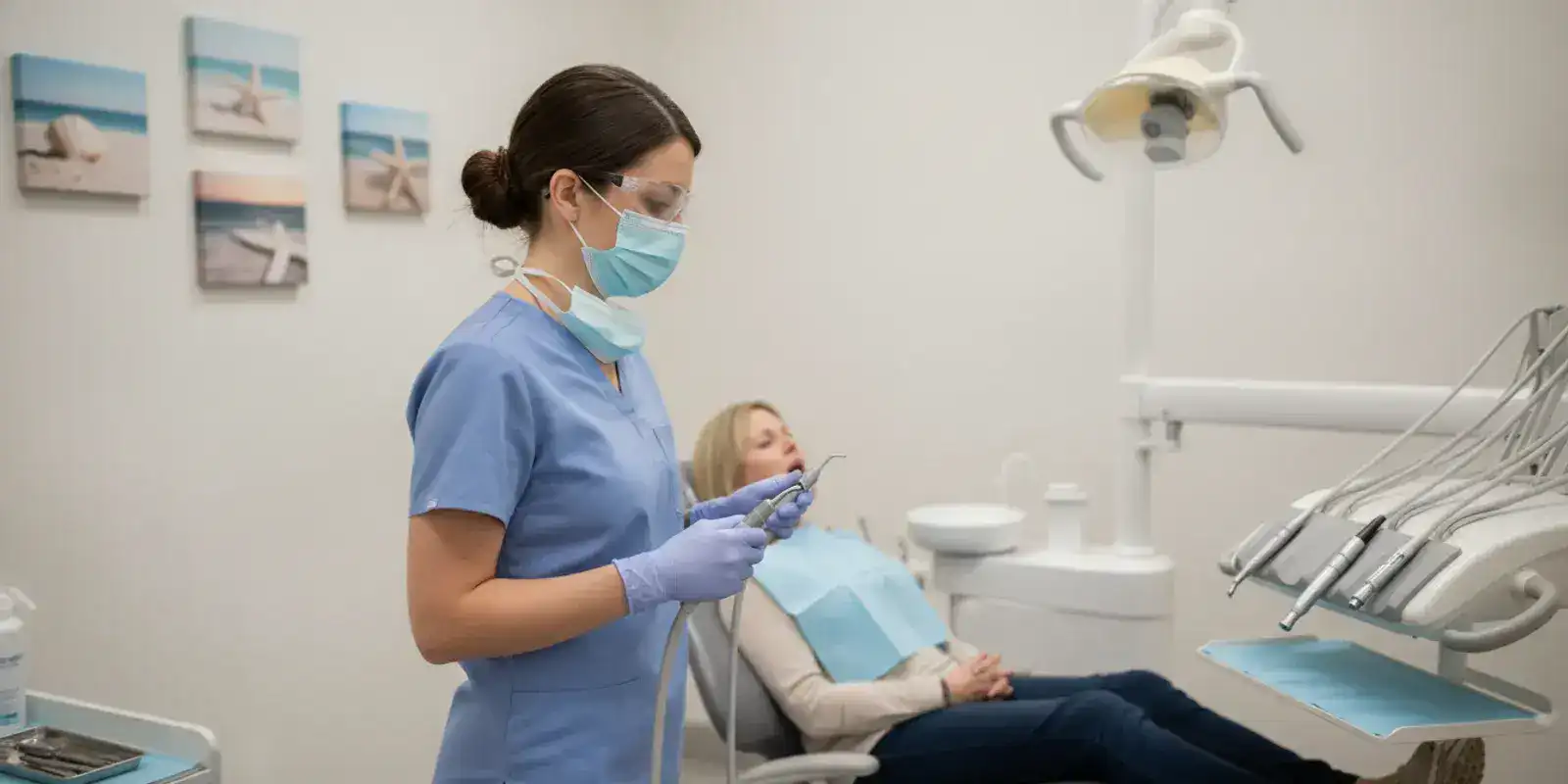
If you are wondering how often you actually need a dental cleaning, the most accurate answer depends on your mouth, your health, and what your dentist finds during an exam. Many people are advised to come in about every six months, but that schedule is not right for everyone. Some people benefit from more frequent visits, while others may have a different interval recommended after an individual evaluation.
Contact us to plan your next visit
A routine cleaning is an opportunity to remove hardened deposits that brushing and flossing cannot clear at home, check the health of your gums, and discuss changes in your oral health. It is not a substitute for daily home care, and it does not guarantee that you will never develop a cavity or gum problem. The goal is to keep track of what is happening and make a plan that fits your needs.
It can help to separate three questions that often get blended together: how often you need a cleaning, how often you need a dental examination, and whether a particular finding calls for a separate follow-up. These visits may happen on the same day, but they do not always serve the same purpose. Your dentist can explain which part of your care plan is due and why.
How often do most people need a dental cleaning?
For many patients, a cleaning and dental checkup about every six months is a familiar starting point. That does not mean there is one schedule that applies to every patient or that six months is a medically required interval for every mouth. Your dentist may recommend a different timing based on your exam, your history, your current gum health, and how your oral health changes over time.
If you have had regular visits and your gums and teeth have remained stable, your dental team may continue to recommend routine appointments at a predictable interval. If you have a history of gum disease, new concerns, or factors that make plaque buildup or inflammation more likely, you may be asked to return sooner. A dentist may also suggest a longer interval for some patients after considering their individual situation. Do not change an interval prescribed for you without discussing it with your dental provider.
The date of your next cleaning should come from the care plan made for you, rather than a rule of thumb alone. At Cameron Park Dental Care, the interval can be discussed during a visit, along with any questions about what was seen during the exam. Learn more about the practice’s dental cleaning services in Cameron Park.
If you are trying to remember the timing, look at the date written on your checkout papers, appointment reminder, or patient portal if you use one. If you cannot find it, a quick call to the office can clarify whether you were advised to return in a few months or later. This is better than guessing based on when a family member usually goes. Household members may have different needs even when they share the same meals and routines.
Why is six months such a common recommendation?
Many people find it practical to schedule two routine dental visits a year. A regular interval can make it easier to keep appointments on the calendar, review changes, and address concerns before they become harder to manage. It also gives the dental team a chance to compare what they see from one visit to the next.
However, a six-month interval should not be treated as a guarantee that a patient will stay free of cavities or gum disease. Oral health is affected by more than how often someone has a professional cleaning. Home brushing and flossing, diet, tobacco use, dry mouth, medications, health history, dental work, and individual patterns all matter. Even patients who keep routine appointments can need additional evaluation if symptoms develop between visits.
Think of the recommended interval as part of a broader prevention plan. That plan may include cleanings, examinations, home-care guidance, and follow-up for a particular finding. Your dentist can explain why a particular interval is suggested and whether it may change over time.
A regular appointment also creates a useful checkpoint. You can raise a small concern, such as a place that catches food or a spot that bleeds when you clean between teeth, before it becomes a routine part of your day. The dental team can look at the area, ask when it started, and decide whether to monitor it, offer a home-care adjustment, or assess it more closely. This does not mean every minor change signals a serious problem; it means that changes are easier to discuss when you mention them.
The interval may be revisited as your circumstances change. A patient with stable findings for several visits may not have the same plan as someone whose gum condition or cavity risk has changed. A recommendation is a working part of your care, not a permanent label. Ask whether the team expects to reassess it at the next appointment.
What happens during a routine cleaning and checkup?
A routine dental visit commonly includes a review of your health history, an examination, and cleaning. The exact steps depend on what you need and the practice’s evaluation. Your dental team may ask whether you have noticed sensitivity, bleeding, discomfort, a change in your bite, or another new concern. Mentioning a change helps the team decide whether it needs a closer look.
During a cleaning, a dental professional removes plaque and hardened deposits, including buildup in areas that can be difficult to reach with a toothbrush. The visit may also include polishing and guidance about brushing, flossing, or other home-care habits. A cleaning is not the same as treatment for every dental concern. If an examination identifies an issue, your dentist will discuss what it means and whether another appointment or treatment is appropriate.
The evaluation may include an oral exam and, when clinically appropriate, dental imaging. Imaging is not automatically needed at every visit; the decision should be based on your circumstances and your provider’s assessment. The purpose of an exam is to understand your current oral health, not to assume that every patient needs the same tests or treatment.
Before the appointment, it may be helpful to note any medication changes, health updates, new symptoms, or questions you want to remember. If you have a particular tooth or area in mind, point it out rather than hoping the team notices what you have felt at home. You can also mention whether you have had a hard time using a particular kind of floss or brush. The visit is a chance to make preventive care practical for your routine.
If the team recommends imaging or additional evaluation, ask what it is intended to clarify. You can ask how the finding relates to your symptoms or history and what the next step would be. A clear explanation helps you distinguish routine preventive care from a separate treatment recommendation. To see how preventive care fits into a wider care plan, read about preventive dentistry at Cameron Park Dental Care. You can also review the practice’s comprehensive oral exams.
When might you need cleanings more often?
Your dentist may suggest a shorter interval when your oral health or history indicates that closer follow-up could be useful. The recommendation should be based on your exam and individual needs. It is not a judgment about how well you care for your teeth. A shorter schedule can simply give your dental team more opportunities to monitor a concern and support your home-care plan.
Reasons your provider may discuss more frequent visits include:
- A history of gum disease. Patients who have been treated for periodontal disease may need ongoing professional maintenance. The timing depends on the condition and the care plan; a routine preventive cleaning and periodontal maintenance are not always the same appointment.
- Signs of gum inflammation or recurring buildup. Your dentist or hygienist may recommend follow-up if they see areas that need closer monitoring or are difficult for you to keep clean at home.
- A higher risk of cavities. A history of cavities, dry mouth, or other individual factors may lead your dental provider to discuss closer monitoring and preventive measures.
- Dental appliances or work that needs monitoring. Braces, retainers, bridges, implants, crowns, and other dental work can create areas that need special attention during home care and professional visits. The presence of dental work alone does not determine the interval, but it is worth discussing.
- Health or medication changes. Some health conditions and medicines can affect the mouth, including saliva. Tell the dental team about changes to your health and medication list so your care can be considered in context.
- Challenges with daily cleaning. Pain, limited dexterity, crowded teeth, or difficulty reaching certain areas can make plaque control harder. Your team may offer practical adjustments and decide whether follow-up should be closer together.
In some situations, a provider may recommend periodontal maintenance at intervals more frequent than twice a year. Do not assume that a shorter appointment cycle applies to you just because it is common for another person. Ask what the visit is intended to monitor, how often the team recommends it, and what findings would lead to a different schedule.
It is useful to ask whether a closer interval is temporary or ongoing. For example, the dental team might want to check a specific change after a period of time, or it might recommend regular maintenance related to a previously treated gum condition. The purpose affects how you understand the plan. Ask what progress or stability would look like and when the timing might be reviewed.
There may also be a practical home-care issue behind the recommendation. A dental bridge, crowded teeth, or a tender area can make it difficult to remove plaque consistently in one spot. Ask the hygienist to show you the area in a mirror and demonstrate a suitable cleaning tool. A small technique change may make a meaningful difference to your daily routine, though it does not replace the interval your dentist has recommended.
Could you need fewer visits than twice a year?
Some people ask whether they can safely wait longer than six months. A longer interval may be considered in certain circumstances, but it should not be based only on the fact that your teeth feel fine or that you have not noticed a problem. Some dental concerns do not cause obvious symptoms at first. An exam and discussion of your history help determine whether a longer interval is suitable.
If you are considering spacing visits farther apart, ask your dentist to explain the reasoning and any tradeoffs. The answer may depend on your past findings, current gum health, cavity history, and ability to maintain home care. If your provider recommends a particular follow-up interval, clarify whether it is a routine cleaning, a focused recheck, or maintenance for a condition.
Skipping visits without discussing it may also mean losing an opportunity to check changes and update advice. If cost, time, anxiety, or another barrier is making appointments difficult, tell the office. A clear conversation may help you understand what is most important to address and how to plan the next step. Do not feel that you need to wait for pain before asking for guidance.
If the suggestion is to return less often, you can still agree on what to do if something changes. For example, ask whether repeated gum bleeding, a new sensitivity, or difficulty cleaning a particular area should prompt a call. Knowing when to reach out makes a longer routine interval less like an open-ended wait. It also helps ensure that the plan accounts for both scheduled preventive visits and unexpected concerns.
Personal preference is worth discussing, but it is not the only factor. A patient may prefer fewer appointments because of a busy schedule, while the dental team may see a reason for closer observation. Explain what is difficult about attending and ask whether there is a realistic way to plan ahead. The goal is to reach a schedule informed by your oral health and manageable enough for you to follow.
How do age and life changes affect cleaning schedules?
Age alone does not set a cleaning schedule. Children, teenagers, adults, and older adults all have individual needs, and the interval can change as a person’s mouth and health change. The dentist can consider development, dental history, home-care challenges, and any current concerns rather than relying on age by itself.
For children and teens, regular dental visits give the provider an opportunity to review developing teeth and offer age-appropriate prevention guidance. Parents can ask what brushing and flossing support is appropriate for their child and how the recommended interval was selected. The child’s risk and history matter; a sibling’s schedule does not necessarily apply.
Adults may notice changes related to work, diet, stress, medications, or dental treatment. Pregnancy and other changes in health are also reasons to let the dental team know what is going on and ask whether any adjustments are appropriate. Older adults may have additional considerations such as dry mouth, medication changes, restorations, or difficulty using a toothbrush or floss. These are topics to discuss, not reasons to assume that every person in the same age group needs the same schedule.
Bring an updated medication list and mention relevant health changes at your appointment. If you have a new symptom, describe when it began and what makes it better or worse. This helps the dental team decide whether the issue should be assessed separately from a routine cleaning.
Family schedules can be convenient, but it is still sensible to think about each person’s plan separately. A parent and child might book appointments on the same day, for example, while returning at different intervals. One may have stable gum health and another may need closer monitoring or a check on a particular concern. Ask the office to make the next recommended date clear for each person so that a convenient family visit does not become a one-size-fits-all schedule.
Changes in coordination or mobility can also make a familiar routine harder. If brushing or flossing has become uncomfortable or difficult, explain which movement or area presents a challenge. The team may be able to suggest an adapted tool or technique and consider whether additional support is useful. You do not have to wait for a major problem to ask for a more manageable approach.
What signs mean you should call before your next cleaning?
A routine cleaning schedule is not meant to replace contacting a dental office when a new problem appears. Call your dentist if you notice a persistent or concerning change, even if your next routine visit is not due yet. The office can help determine whether you should be seen sooner. A phone conversation is not a diagnosis, but it is a useful first step for deciding how to proceed.
Examples of changes worth mentioning include:
- Gums that bleed repeatedly when brushing or flossing.
- Ongoing gum tenderness, swelling, or a change in the way your gums look.
- New or persistent tooth sensitivity, discomfort, or pain.
- A chipped or cracked tooth, a loose restoration, or a change in how your teeth fit together.
- A sore, lump, or other change in your mouth that does not resolve or that concerns you.
- Difficulty chewing or keeping an area clean.
These signs can have different causes, and a list cannot determine what is happening in your mouth. Avoid trying to diagnose the cause yourself or delaying care because you think a cleaning will address it. The dental team may recommend an examination or another appropriate next step.
When you call, give a concise description: what you noticed, where it is, when it began, and whether it is changing. Mention any related event, such as a recent dental procedure or a new medication, if relevant. You do not need to arrive with a theory about the cause. Clear details help the office understand your concern and decide what information or appointment may be appropriate.
If you are not sure whether the change is urgent, say that plainly and ask for guidance. Do not wait for a routine cleaning simply because you already have one scheduled several weeks away. The office can help determine whether to keep that appointment, move it sooner, or arrange a different evaluation. If symptoms are severe or rapidly worsening, explain that when you call so the team can respond with appropriate direction.
Does a dental cleaning hurt?
Many routine cleanings are manageable, but the experience can vary. Gum inflammation, sensitive teeth, the amount and location of buildup, and individual comfort can affect how a cleaning feels. Tell your hygienist if you are uncomfortable, have a sensitive area, or need a pause. Letting the team know before and during the visit makes it easier to discuss reasonable comfort adjustments.
If you have avoided cleanings because of anxiety, embarrassment, or a difficult past experience, you can say so when you contact the office. You do not need to apologize for the condition of your teeth or gums. A useful appointment begins with an honest conversation about your concerns and what you can manage. The team can explain what to expect and discuss available comfort options where appropriate.
For patients whose anxiety affects dental care, Cameron Park Dental Care offers sedation options; whether a particular option is appropriate requires discussion and evaluation. You can learn more about sedation dentistry and raise your concerns with the practice before an appointment.
You can make the appointment feel more predictable by asking the team to describe the steps before they begin. Agree on a signal you can use if you want a pause, and let the hygienist know which areas tend to be sensitive. If you have had a difficult experience before, explain what happened and what you would like the team to do differently if possible. This gives everyone a practical starting point rather than leaving you to manage discomfort silently.
There is no need to assume that every cleaning will feel exactly like a previous one. Your mouth and the amount or location of buildup can change. Tell the hygienist what you are experiencing in the moment. If a cleaning seems unusually uncomfortable, the team can discuss what they observe and whether the appointment or care plan should be adjusted. Comfort concerns are a reasonable part of the conversation, not a reason to avoid asking questions.
What can you do between professional cleanings?
Professional cleanings support oral health, but everyday habits matter between visits. A practical routine is one you can follow consistently and adapt to advice from your dentist. If you are unsure whether your technique is effective, ask the hygienist to demonstrate or review it rather than guessing.
- Brush thoroughly and gently. Use a soft-bristled toothbrush and fluoride toothpaste unless your dental provider has advised something different. Clean the surfaces of each tooth and along the gumline without scrubbing aggressively.
- Clean between teeth each day. Floss or use another interdental tool recommended for your mouth. If a tool is uncomfortable or difficult to use, ask for a demonstration or an alternative that fits your needs.
- Pay attention to the areas that are easy to miss. Back teeth, crowded areas, and spaces around dental work may need extra care. Ask your dental team to point out specific areas to focus on.
- Follow guidance about fluoride or other preventive products. Not every product is right for every person. Ask before adding a rinse or changing your routine, especially if you have a health concern or take medication.
- Keep your dental team informed. Mention medication changes, dry mouth, new sensitivity, or a change in your health. Updated information can help the team tailor recommendations.
- Keep appointments based on your care plan. If you need to reschedule, contact the office and ask when to return rather than letting an uncertain date drift indefinitely.
Home care does not need to be perfect to be worthwhile. If you have missed areas or fallen out of a routine, use your next visit to ask for practical suggestions. Small adjustments that fit your day-to-day life are more useful than an elaborate plan that is hard to maintain.
One way to make home care more consistent is to connect it to an existing daily habit. Keep the supplies you use where they are easy to reach, and choose a time when you are less likely to rush. If you find yourself skipping interdental cleaning because floss is awkward, tell the hygienist rather than giving up on the step altogether. There may be another tool that is easier for you to handle, especially around dental work or tight spaces.
Technique matters, but pressure and persistence matter too. Brushing harder is not a substitute for reaching all tooth surfaces. If your gums feel sore or you see wear on your brush, ask whether your technique could be gentler. A demonstration at the next appointment can help you see the angle and motion that may work better for your mouth. You can also ask the team to identify one or two priority areas rather than trying to overhaul every habit at once.
Keep track of patterns that might be useful to mention. For instance, note whether a particular area tends to bleed, whether dry mouth is worse at a certain time, or whether food repeatedly gets caught near a restoration. These observations do not diagnose a problem, but they give your dental provider concrete information. Avoid waiting until the next appointment if a change is persistent or concerning; contact the office for guidance.
How should you decide when to book your next cleaning?
Start with the timing your dentist recommended at your last visit. If you do not remember it, call the office and ask. If you are new to the practice, request an evaluation so the dental team can review your history and discuss an interval suited to your current oral health. A new-patient visit may include more than a cleaning if an examination identifies a separate concern; the office can explain the plan before proceeding.
It may help to ask these questions at your appointment:
- What did you notice about my teeth and gums today?
- How often do you recommend a cleaning or maintenance visit for me, and why?
- Is this visit routine prevention, periodontal maintenance, or follow-up for a specific finding?
- What changes should prompt me to call before my next appointment?
- Are there one or two home-care changes that would make the biggest difference for my situation?
- When should we review the schedule again?
These questions can make the recommendation easier to understand and remember. If the interval is shorter than you expected, ask what the team hopes to monitor. If it is longer, make sure you understand what symptoms or changes should bring you back sooner.
You can make the conversation easier by asking for the recommendation in a specific way. Instead of leaving with a general impression that you should come back “soon,” confirm the approximate month or interval and what kind of appointment to request. If you are scheduling at the front desk, repeat the date back or write it down. A clear plan reduces the chance that a recommended recheck gets confused with a routine cleaning.
If more than one type of follow-up is discussed, ask whether they need to happen together or separately. For example, the office may describe a cleaning interval and also mention a focused evaluation if a symptom continues. Do not assume that booking one automatically covers the other. Knowing the purpose of each visit helps you set expectations and decide what questions to bring.
If you are a new patient in Cameron Park or a nearby community, bring the information you have about past dental care. Approximate dates, prior gum treatment, a history of frequent cavities, and current medications can all help the team understand your background. It is fine if you do not know every detail. Share what you can, then ask what the dentist needs to evaluate before suggesting an interval. For appointment information, see the practice’s new-patient information.
What if you have missed a cleaning?
If it has been longer than planned since your last visit, it is still worth getting back in touch. You do not need to wait until you have a problem, and you do not need to feel embarrassed. Tell the office roughly how long it has been and whether you have noticed any symptoms. The team can help you arrange an appointment and explain what to expect.
Depending on your history and exam, the next visit may involve a routine cleaning, a more detailed evaluation, or a discussion about other care. The appropriate plan cannot be determined solely by the time since your last appointment. If the office recommends additional care, ask what was found, what the options are, and whether the next step is time-sensitive.
If scheduling has been difficult because of work, transportation, anxiety, or cost, mention that when you call. Clear communication helps the practice understand what is getting in the way and discuss available next steps. For information about requesting an appointment, see the practice’s new-patient information.
It may feel tempting to postpone a visit until you have time to catch up on home care first. You do not need to wait until your routine is perfect. A professional appointment can help you understand what needs attention now and which steps are realistic for you going forward. If you are worried about being judged, say so when you call; the team can explain the visit and answer practical questions before you come in.
If the gap has been several years, share that honestly. The office can use the information to plan an appropriate evaluation rather than assuming that your last visit was recent. Your first appointment back may include questions about your health history and a discussion of what is most important to assess. Ask the team to explain each recommendation in plain language and to distinguish immediate concerns from longer-term preventive planning.
How can you compare different appointment recommendations?
Patients sometimes hear a recommendation for a routine cleaning, a periodontal maintenance visit, or a focused check and are unsure whether these mean the same thing. They are not interchangeable labels in every situation. Ask what the visit is meant to accomplish and whether it includes the same steps as your previous cleaning. Understanding the purpose helps you avoid comparing schedules that were set for different reasons.
A routine preventive appointment is generally part of ongoing care for a patient whose needs are being monitored over time. A periodontal maintenance recommendation may relate to a history of gum disease and the plan following treatment. A focused evaluation may be intended to look at a particular symptom or finding. Your dental provider can tell you which category applies to you and whether you should expect a cleaning, an examination, or another service at that visit.
When a recommendation differs from what you expected, use a few concrete questions to clarify it:
- What specific finding or history led to this interval?
- What is the purpose of the next appointment?
- What should I do at home before then, if anything?
- How will we decide whether to continue or change the schedule?
The answers can help you understand how the plan fits your situation without trying to interpret a schedule in isolation. It is also reasonable to ask the dentist to repeat or summarize the recommendation before you leave. If you have questions later, contact the office rather than relying on memory or advice intended for a different patient.
It can also be helpful to check whether the recommendation is about a cleaning interval or about how soon the dentist wants to see a change again. Those are related, but not always identical. A short follow-up may be planned to recheck a symptom or review how a specific area is responding. A routine cleaning schedule may remain separate. If you have insurance questions, ask the office to explain what it can verify and confirm your own plan benefits with your insurer; coverage details do not determine clinical need, and benefits can vary by plan.
When a care plan includes more than one visit, ask which appointment should be booked first and whether one depends on the result of another. If you need to reschedule, ask how far you can move the appointment without changing the clinical intent of the plan. Avoid assuming that any available opening is equivalent when a provider has asked to see you within a particular time frame. If timing is unclear, confirm it with the practice before changing the schedule.
How might cleaning frequency differ from person to person?
Consider a few broad examples to understand why two people may receive different recommendations. These examples are not a way to set your own schedule; they show what a dental professional may consider during an individual evaluation.
A patient with stable findings
Someone with a history of regular visits, stable gums, and no new concerns may be advised to continue a familiar routine interval. The team can still review home-care habits and ask about changes at each visit. A stable pattern is useful information, but it does not mean future exams are unnecessary or that the schedule will never change. The next recommendation depends on what the provider sees and what the patient reports.
A patient with a history of gum treatment
A patient who has received treatment for gum disease may have a maintenance plan that differs from a routine preventive visit. The dental team may want to monitor gum health and areas that were previously affected. The appropriate timing depends on the person’s condition and treatment history. Ask what the maintenance appointment includes and how the team will assess whether the plan remains appropriate.
A patient noticing a new concern
A person who develops repeated bleeding, sensitivity, or discomfort should not simply wait for the next scheduled cleaning without asking for guidance. The office may recommend an earlier evaluation, or it may advise how to proceed based on the description. A symptom-focused visit is not automatically the same as a cleaning. Explaining when the change began and whether it is getting worse helps the provider decide what kind of assessment may be needed.
A patient whose home-care routine has become difficult
Someone with a new bridge, crowded teeth, limited hand mobility, or persistent dry mouth may need individual home-care coaching and closer follow-up. The first helpful step may be learning how to clean a particular area with a suitable tool. The dentist can then consider whether the appointment interval should change. An appliance or health change does not automatically mean more frequent cleanings; its effect on that person’s oral health is what matters.
These examples underline why a friend’s schedule, a family member’s experience, or a general online rule cannot replace an examination. If your recommendation seems different from someone else’s, ask what factors are relevant to your mouth and history. The dental team should be able to explain the purpose of the interval in terms that make sense to you.
How can you prepare for a useful cleaning visit?
A little preparation can help you use the appointment well, especially if you have not been in for a while or have several questions. You do not need to complete a special checklist or have every detail memorized. Start by collecting the information that could affect your care and deciding which concern you most want to discuss.
- Update your health and medication information. Include recent changes and anything you are unsure about. If you do not know whether a medicine matters for dental care, list it and ask the team.
- Write down symptoms or changes. Note the location, approximate start date, and whether it is improving, worsening, or coming and going. If something only happens while eating or brushing, mention that pattern.
- Bring questions about your routine. Tell the hygienist which part of brushing or cleaning between teeth is difficult. Ask for a demonstration that matches your mouth and the tools you have at home.
- Confirm what type of visit is planned. If you were asked to return for a recheck or maintenance, verify that when you book. This can prevent confusion about the appointment’s purpose.
- Share comfort needs ahead of time. If you have anxiety, sensitivity, or a past experience that affects your care, tell the office when arranging the visit so the team can discuss expectations.
At the end of the visit, repeat the next-step plan in your own words. For instance, confirm whether the team recommends another routine cleaning, a separate follow-up, or a change to your home-care routine. Ask when to call if a symptom persists and when the schedule should be reviewed again. You can write these points down or ask whether they are included in your visit instructions. That short recap makes it easier to follow the plan once you are back in your usual routine.
Frequently asked questions about dental cleaning frequency
Is a cleaning every six months necessary for everyone?
No single interval is right for everyone. Six months is a common starting point, but your dental provider may recommend a different schedule after considering your oral health, history, and current findings. Ask how the interval was chosen for you.
Can I wait until my teeth hurt to schedule a cleaning?
It is better not to use pain as the only signal to seek care. Some concerns may not cause obvious symptoms early, and a new problem should be discussed even if a routine visit is not due. Contact a dental office for guidance if you notice a persistent change.
Does everyone with gum disease need a cleaning every three months?
Not necessarily. Some patients may be advised to have periodontal maintenance more often than routine preventive visits, but the timing depends on their condition and individual care plan. Your dentist or periodontal provider can explain the recommended interval and what each visit is intended to do.
Will a cleaning prevent every cavity?
No. A cleaning removes deposits and supports preventive care, but it cannot guarantee that cavities will not occur. Daily home care, diet, individual risk factors, and other aspects of oral health also matter. Keep follow-up visits and ask your dentist what prevention steps fit your needs.
Should I schedule a cleaning if my gums bleed?
Let your dental office know about repeated bleeding rather than assuming it is normal or waiting for a routine appointment without asking. Bleeding can have different causes, and only an evaluation can help determine what is happening. Your provider can advise whether you should be seen sooner.
What if I am nervous about going to the dentist?
Tell the practice when you call and share what would help you feel more comfortable. The team can explain the visit and discuss appropriate comfort options. If you have questions about sedation, ask about them before treatment so your provider can review your health history and determine what is suitable.
Request an appointment with Cameron Park Dental Care
There is no universal calendar that determines how often you need a dental cleaning. For many people, visits about every six months are a useful routine, while others need a different schedule based on an individual evaluation. If you are unsure when to return, contact Cameron Park Dental Care in Cameron Park and ask the team to help you plan the next step.